Queens is the borough of neighborhoods. From the attached tudors of Forest Hills to the vibrant apartment blocks of Astoria and the multi-generational homes in Flushing, Queens parents are experts at making life work in diverse spaces. But whether you have a sprawling suburban-style kitchen or a “cozy” galley, there is one universal newborn challenge: the endless mountain of dirty bottles.
If it feels like you are spending half your life at the kitchen sink, you aren’t alone. A newborn can go through 8 to 12 feedings in a single 24-hour period. If you are pumping, that number of items to wash doubles. In the world of urban baby living, a disorganized sink isn’t just a nuisance; it’s a source of genuine stress that eats away at your precious resting time.
We’ve talked to moms across the borough to find out how they manage the chaos. They’ve moved beyond the “pile it by the faucet” method and created streamlined, hygienic systems that keep their kitchens functional and their babies safe. Here is the Queens-approved guide to organizing a professional-grade bottle-washing station.
The “Dirty Basin” Rule
In a busy Queens household, the kitchen sink is a high-traffic zone. It’s where you rinse coffee mugs, wash vegetables, and dump leftover soup. To maintain a clean and safe home, you must separate “baby business” from “house business.”
“I never let my baby’s bottles touch the actual surface of the sink,” says Maria, a mom of two in Sunnyside. “I bought a dedicated plastic washbasin that lives on the counter. When a bottle is finished, it goes straight into that basin with some warm, soapy water. It keeps the bottles away from the bacteria of our dinner dishes and makes it easy to do a ‘bulk wash’ once a day.”
Using a separate basin is also recommended by the Centers for Disease Control and Prevention (CDC) to prevent cross-contamination. It’s a simple newborn basics hack that protects your baby’s developing immune system.
The “Vertical Growth” Strategy
Queens apartments, particularly in older buildings in Jackson Heights or Ridgewood, often suffer from “limited counter syndrome.” If you have a microwave, a coffee maker, and a toaster, there is very little room left for a drying rack.
Local moms recommend “growing up, not out.” Instead of the wide, circular drying racks that take up a two-foot radius, look for vertical bottle trees or slim, tiered racks.
- The Pegboard Hack: Some parents have installed small IKEA pegboards on the backsplash behind the sink. They use hooks and small baskets to hang bottle nipples, caps, and travel discs. This keeps the smallest baby gear essentials off the counter entirely, allowing them to air-dry with maximum ventilation.
- Magnetic Strips: Use a magnetic strip to hold stainless steel tongs or specialized bottle brushes, keeping them within arm’s reach but out of the “clutter zone.”
Streamlining Feeding and Milk Prep
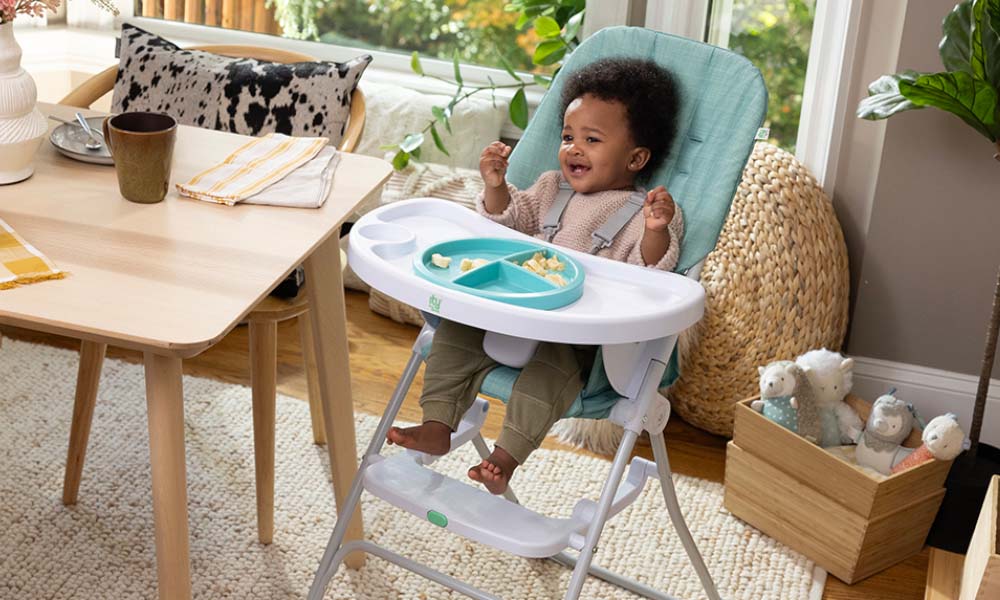
Organization at the sink actually starts at the feeding chair. Queens moms emphasize that a bottle-washing station is only as good as the logistics leading up to it.
If you are managing feeding and milk prep, keep a small “pre-wash” kit near your feeding station. This could be a simple container of water where you can drop used nipples so the milk doesn’t dry and become difficult to scrub later. “By the time I get to the kitchen at 10:00 PM to do the big wash, everything has been soaking, and it takes me five minutes instead of twenty,” explains Sofia, an Astoria mom.
Managing the “Part” Problem
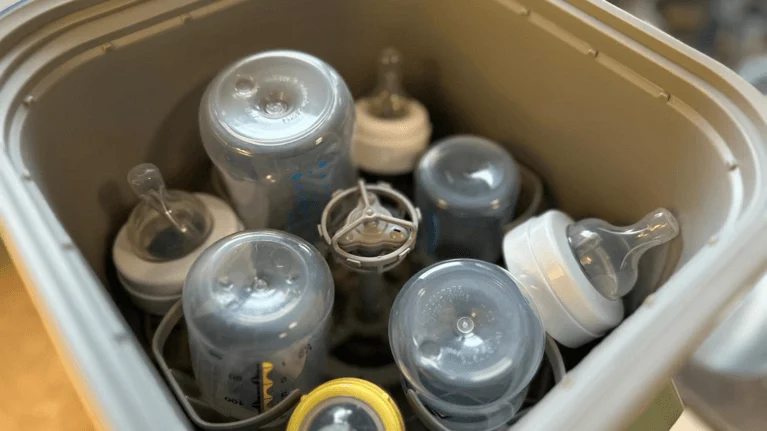
The modern baby bottle is a marvel of engineering, but it often comes with five different parts: the bottle, the nipple, the ring, the cap, and sometimes an internal vent system. Losing a single vent can render a bottle useless.
To solve this, Queens parents use “dishwasher baskets” even if they are hand-washing. These small, mesh or plastic cages hold all the tiny components in one place. When you are done scrubbing, you simply place the entire basket on the drying rack. This prevents the “missing nipple” mystery that usually happens at 3:00 AM when you are desperately trying to assemble a bottle.
The Power of the Night-Shift Setup
In many Queens homes, the “night shift” is a coordinated effort. Whether you have a partner helping or are lucky enough to have postpartum support from a nearby grandmother (a Queens specialty!), the morning transition is smoother if the washing station is reset at night.
“My husband’s ‘job’ before he goes to bed is to clear the drying rack,” says Jessica from Long Island City. “He puts away the dry bottles and pre-fills them with the correct amount of filtered water. When I wake up for the first night feed, the counter is clear, the bottles are ready, and I don’t feel like the house is closing in on me.”
This nightly reset is a vital part of sleep and soothing for the parents. Waking up to a clean kitchen provides a mental “clean slate” that makes the early morning hours much more bearable.
Dealing with Queens Water
While NYC water is generally high-quality, older plumbing in some parts of the borough can lead to mineral buildup or “hard water” spots on clear plastic bottles.
- The Vinegar Rinse: Once a week, soak your bottles and parts in a mixture of water and white vinegar. It breaks down the film and keeps the bottles looking new.
- Sterilization Logistics: If you live in a smaller space, skip the giant electric sterilizer and use microwave steam bags. They work in 90 seconds and can be tucked into a drawer when you’re finished.
For more tips on navigating the quirks of older infrastructure, check out our blog for guides on city-specific parenting. If you’re unsure about the best cleaning agents to use, our faq section covers the safest soaps and brushes for newborn gear.
Summary: A System for Sanity
Organizing a bottle-washing station in Queens isn’t about having a “perfect” kitchen; it’s about creating a system that protects your time and your baby’s health. By separating your wash space, using vertical storage, and resetting the station nightly, you can turn a tedious chore into a predictable, manageable routine.
Your kitchen might be small, and the bottles might be many, but with a little borough-bred ingenuity, you can master the “sink struggle” and get back to what matters most—resting and bonding with your little one.
If you’re feeling overwhelmed by the gear or need help choosing the best space-saving rack for your specific Queens apartment, please contact us. We’ve seen every kitchen layout in the borough and love helping parents find their flow.