Living in a major city often means making peace with “apartment-sized” appliances. While a slim refrigerator fits perfectly into a galley kitchen, it presents a unique challenge once a newborn arrives. Between the breast milk bags, prepared formula bottles, and your own groceries, that limited shelf space becomes some of the most valuable real estate in your home.
In the world of urban baby living, storage isn’t just about making things fit; it’s about biological safety. Proper milk storage is a critical part of feeding and milk prep because breast milk and formula are highly perishable. In a small fridge, temperatures can fluctuate more easily, and “cross-contamination” is a constant risk. By mastering a few organization hacks, you can ensure your baby’s nutrition remains safe without sacrificing your entire fridge to the cause.
The Golden Rules of Milk Safety
Before we dive into the logistics of small spaces, we must address the safety standards. Newborns have developing immune systems, making them more susceptible to bacteria. According to the Centers for Disease Control and Prevention (CDC), freshly expressed breast milk can be stored in the back of the refrigerator for up to four days, while prepared formula should be used within 24 hours.
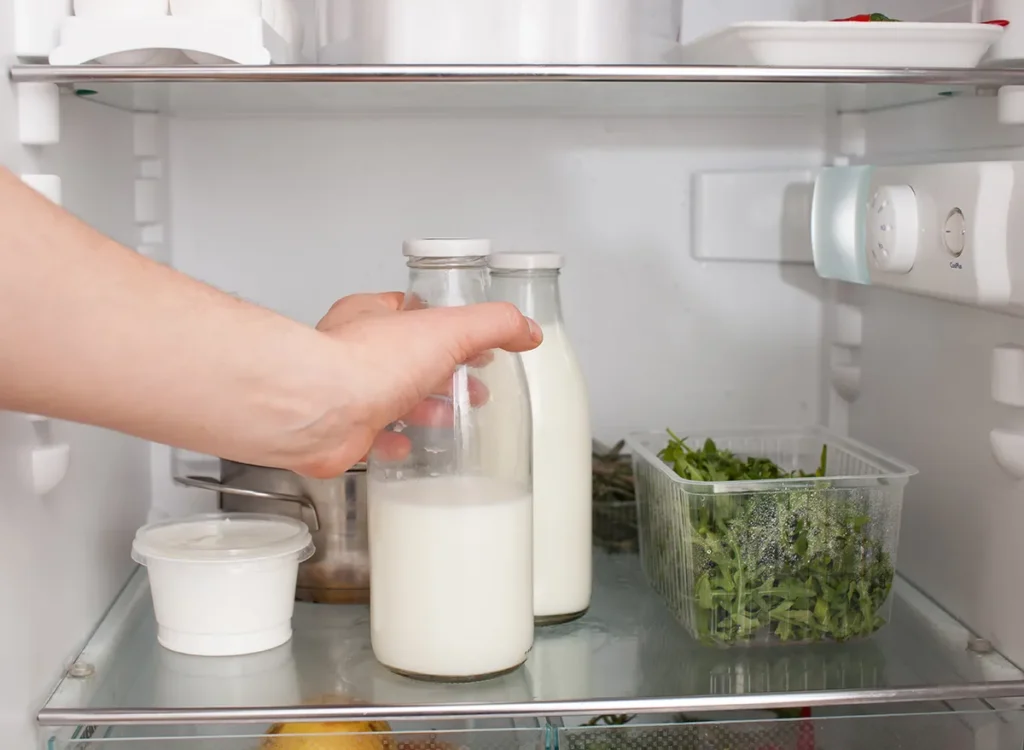
The most common mistake in tiny refrigerators is storing milk in the door. While the door bins seem like the perfect size for bottles, they are the warmest part of the fridge. Every time you open the door to grab a snack, the milk is hit with a blast of room-temperature air. To maintain newborn basics of safety, milk must always be stored in the coldest part of the refrigerator—typically the back of the lowest shelf.
1. The “First-In, First-Out” (FIFO) System
In a cramped fridge, it is easy for a bottle or a bag of milk to get pushed to the dark corners and forgotten. A “First-In, First-Out” system ensures that you are always using the oldest milk first, preventing waste and ensuring freshness.
- The Soda Can Dispenser Hack: Many city parents use slim, gravity-fed soda can organizers to store breast milk bags. You lay the bags flat to freeze them (which saves massive amounts of space), and then slot them into the organizer in the fridge. When you pull a bag from the front, the next one slides forward.
- Color-Coded Labels: Use simple painter’s tape or “day of the week” stickers. In a tiny fridge, a quick visual cue is much faster than squinting at tiny Sharpie dates in the low light of the kitchen.
2. Vertical Storage: Maximizing the “Air Space”
If you can’t expand horizontally, go vertical. Most tiny refrigerators have adjustable shelves, but they often leave several inches of wasted “air” above the items.
- Stackable Bins: Invest in clear, stackable acrylic bins. Use one for “Ready to Feed” bottles and another for “Milk to be Processed.” This keeps the baby’s items separate from your regular groceries, which is essential for a clean and safe home.
- The “Double-Decker” Tray: If you don’t have enough height for bins, a simple cooling rack or a small shelf riser can create a second level for short bottles or breast milk storage cups.
3. Streamlining Your Milk Prep Station
Small-space living requires you to be a minimalist with your baby gear essentials. You don’t need twenty different storage containers.
“We realized we were losing half our fridge to bulky bottle caps and various storage brands,” says Julianna, a mom in a Manhattan studio. “We switched to a ‘pitcher method’ for formula and breast milk pooling. We prep the total amount needed for the day in one slim, airtight pitcher and pour individual bottles as needed. It takes up a fraction of the space.”
If you use the pitcher method, ensure you are following strict hygiene protocols. You can find more details on this in our blog archives, where we break down the pros and cons of different storage techniques for urban parents.
4. Managing the Freezer “Tetris”
If your refrigerator is tiny, your freezer is likely even smaller. If you are building a “stash” of breast milk, space management is an art form.
- Freeze Flat: Always freeze breast milk bags laying flat on a cookie sheet or a flat piece of cardboard first. Once they are “bricks,” they can be stacked vertically like files in a cabinet. This is the #1 space-saving tip for urban baby living.
- The “Brick” Method: Group your flat-frozen bags into gallon-sized Ziploc bags, labeled by month. These “bricks” are much easier to stack in a small freezer than a loose pile of slippery bags.
5. Dealing with Temperature Fluctuations
Tiny refrigerators, especially older models often found in city rentals, can be temperamental. They might freeze the lettuce on the top shelf while leaving the bottom shelf too warm.
- Refrigerator Thermometer: This is an inexpensive tool that provides massive peace of mind. Place it near your milk storage area to ensure the temperature stays at or below 40°F (4°C).
- The “Cold Sink” Hack: Keep a couple of heavy glass jars or a carton of juice near your milk. These items act as a “cold sink,” helping the fridge recover its internal temperature more quickly after the door has been opened.
6. The Role of Postpartum Support in Inventory
When you are in the “haze” of the first few weeks, keeping track of what is in the fridge is the last thing you want to do. This is a perfect task to delegate to your postpartum support person.
“My partner’s job every evening was the ‘Fridge Audit,'” says David, a dad in Astoria. “He would check the dates, move the oldest milk to the front, and prepare the bottles for the night shift. It meant I didn’t have to think about logistics when I was half-asleep at 3:00 AM.” This small routine is a major factor in effective sleep and soothing for the whole family.
For more quick answers on how long specific types of milk can stay out or be stored, check out our faq. If you’re ever in doubt about the smell or appearance of stored milk, it is always better to err on the side of caution.
Summary: Small Fridge, Big Safety
Safe milk storage in a tiny refrigerator is about discipline and clever tools. By avoiding the door, utilizing vertical bins, and freezing your bags flat, you can maintain a professional-grade storage system in the smallest of kitchens. You don’t need a massive appliance to keep your baby’s milk fresh; you just need a system that respects the science of food safety.
Your refrigerator might be small, but your ability to organize it is a superpower. If you’re struggling to make your kitchen work for your new lifestyle or need advice on the best storage containers for narrow shelves, please contact us. We’ve helped hundreds of city parents turn their “micro-kitchens” into efficient feeding hubs.